Deep Char - Light Char: Debunking Yakisugi Myths
Martin Gottschlich
Dispelling the Light Char Myth in Yakisugi
There is no 'light', 'medium', or 'deep' char - either you do it right or not
Yakisugi — a building material made from charred Japanese cedar — does much more than create a visually striking surface. The controlled heat treatment transforms the wood at a cellular level, fundamentally changing its structure and significantly enhancing its durability and weather resistance.
What Happens to Wood During Authentic Yakisugi Charring
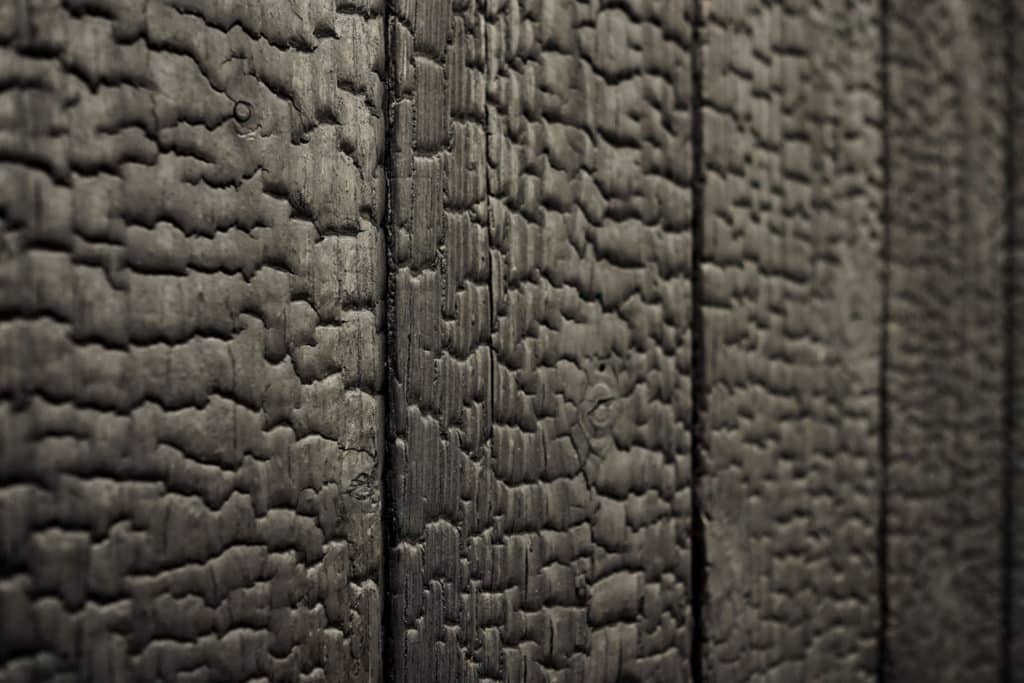
At the core of authentic Yakisugi production is a precisely controlled heat treatment. When exposed to intense heat at the correct temperature, for the correct duration, and at the correct angle, the cells within the wood begin to shrink and partially close. This is not a superficial change — it is a fundamental structural transformation with lasting consequences:
Moisture resistance: As the cells partially close, their capacity to absorb moisture is significantly reduced. This creates a natural defence against the dampness and biological decay that affect untreated timber.
Enhanced stability and hardness: The wood becomes denser as the cells shrink and seal, increasing resistance to wear and mechanical stress.
Reduced swelling and shrinkage: With reduced moisture absorption, the wood is far less prone to the seasonal swelling and contraction that cause cracking in untreated timber. The result is a material that maintains its structural integrity and appearance over decades.
These properties can only be achieved if heat, duration, energy input, insertion angle, and post-treatment follow a strict protocol developed over generations. A uniform, stable soot layer and long-lasting treatment cannot be achieved through manual or rapid flame application.

Why Light Char Is Not Yakisugi
Despite some European manufacturers offering “light char” or “medium char” options and marketing them as Yakisugi, these products do not meet the criteria of authentic Yakisugi production. Among Japanese practitioners, the response to such variants is consistent: “Either you char it to the right level, or you don’t.”
A light char — typically applied with a blowtorch — may offer temporary aesthetic appeal, but it does not achieve the cellular transformation described above. The resulting charred layer is thin and structurally weak, comparable to gold leaf: visually present, but without the depth to provide lasting protection. In wind and weather, such a surface will often begin to flake within a short period.
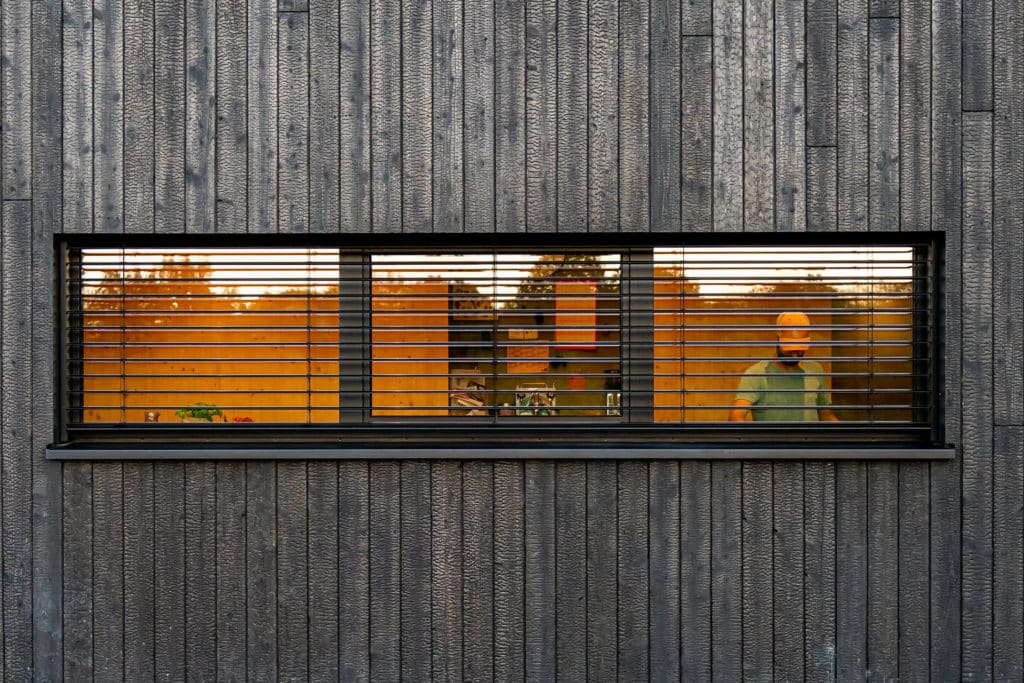
The critical difference is not aesthetic — it is functional. Authentic Yakisugi charring treats the entire board to the correct depth, creating a carbonised layer that is bonded to the wood’s structure and resistant to weathering. A superficial char does not achieve this.
Either you char it to the right level or not at all.
Nakamoto Forestry engineers
Light Aesthetics Without Compromising Depth
For those who prefer a lighter visual finish, Nakamoto Forestry’s Gendai surface achieves exactly this — without sacrificing charring depth. After full authentic charring, the surface is brushed to reveal the wood’s natural grain, resulting in a lighter appearance that retains all the structural and protective properties of deep charring.
This means the choice between a dark charred surface and a lighter wood-grain appearance is an aesthetic one — not a trade-off between looks and performance.
EU (English)
DE (Deutsch)
FR (Français)

UK (English)